

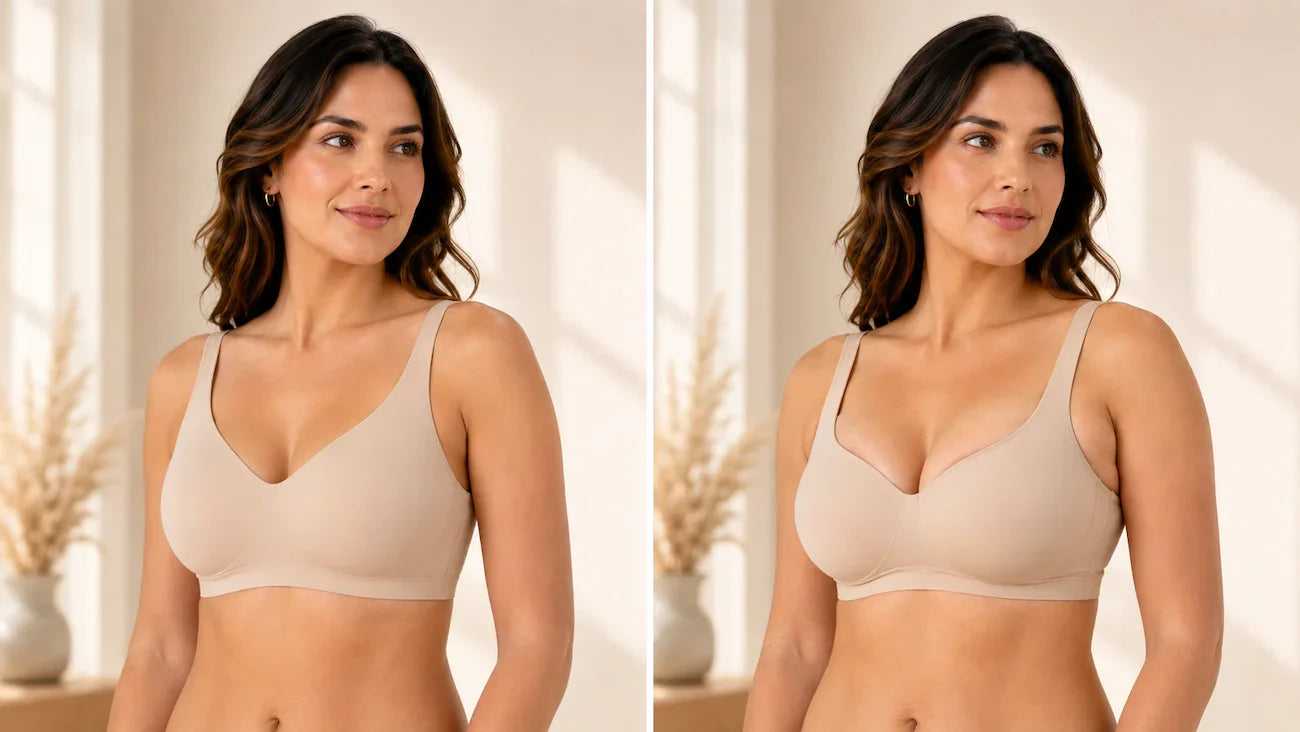
You catch yourself in the mirror and there it is again — tissue bulging over the cup, or that nagging sense that your bra isn't actually holding anything in place. Most people call this "spillage" and leave it at that. But spillage and overflow aren't quite the same problem, and knowing which one you're dealing with makes the fix a lot faster.
Spillage and Overflow Aren't the Same Problem
Bra spillage is a cup problem, specifically. The cup is too small for your breast tissue, so the tissue pushes out past the edge — over the top, out the sides, or right up near your underarm. Under a fitted top, this is the "quad-boob" look: two separate bulges where there should be one smooth line. If you can point to the exact spot where tissue is escaping the cup, that's spillage.
Overflow is the bigger-picture version. It's what happens when the bra as a whole stops containing you properly, even if the cup size on the tag is technically right. A band that's stretched loose lets the cups sag away from your body. Straps pulling more than their share can drag the cups out of position. A cup shape that was never built for how your tissue actually sits — even in the "correct" size — can leave you overflowing without a single number being wrong.
The line between them matters more than it sounds. If you assume it's always spillage and keep sizing up the cup, you can end up in a bra that's technically roomy enough but still gaps at the band or shifts all day — because the actual problem was never the cup.
Why Does Bra Spillage (Overflow) Happen?

A handful of causes show up again and again, whether you're dealing with spillage, overflow, or both at once:
· The cup size is too small. The most common cause, by far. If it's been more than a year since you were last measured, this is worth checking first.
· The band has stretched out. Bands lose their grip over time, especially with regular wear and washing. A band that's gone soft can't keep the cups anchored, no matter how well they fit on paper.
· The style doesn't match your shape. Demi and balconette cuts are shallower by design. That works well for some breast shapes and causes overflow for others, especially fuller or side-heavy busts.
· Straps are compensating for something else. Straps are meant to carry a small share of the weight, not most of it. When they're doing more than that, it's usually a sign the band underneath has already given up.
· Your size has actually changed. Weight shifts, hormonal cycles, even the time of month can move you half a cup size or more. The bra that fit perfectly in the spring might not fit the same way by fall.
· You're wearing the same bra too often. Elastic needs time to recover between wears. Rotating two or three bras instead of relying on one favorite keeps the band from wearing out as fast, which delays overflow caused by fatigue rather than sizing.
It's rarely just one of these at a time. Most people dealing with spillage or overflow have two or three stacking on top of each other, which is part of why "just buy a bigger cup" doesn't always solve it on its own.
The Fix Works for Both Issues
Same starting point for either problem: figure out what's actually going on, then work through it in order.
Do the Lean-Forward Check
Lean forward, scoop everything into the cup, and stand back up straight. If tissue spills right back out immediately, that's spillage — the cup itself is too small. If instead the whole bra shifts, or the band creeps up your back, that's overflow. Worth doing before you buy anything new.
Get Remeasured

Bodies and bands both shift more than people expect. Try our bra size calculator for a five-minute check at home, or test a sister size — same cup volume with a different band-and-cup combination. Either one solves this for a lot of people before anything else needs to change.
Check the Band on Its Own
It should sit level around your ribcage and feel snug on the loosest hook, not riding up in the back by the end of the day. A band that's already stretched can't hold the cups steady, whatever size you're wearing.
If It's Still Happening, It's Probably the Style

Shallower cuts like demi and balconette simply don't hold as much tissue as full-coverage cups or styles with wider side panels do. That's exactly the gap our seamless Jelly Bra was built to close: cups shaped with Jelly Gel® Technology that move with your body instead of cutting a hard line across it, available from S through 6XL, so the fit doesn't depend on guessing your way into the right size.
Keep It From Coming Back
Rotate two or three bras instead of wearing one on repeat, and give the elastic a day to rest between wears. It's a small habit, but it's often the difference between a bra that holds its shape for a year and one that starts overflowing again in a few months.
Spillage and overflow both come down to fit — not something your body is doing wrong. Once you know which one you're actually dealing with, sorting it out usually takes a lot less trial and error than it feels like in the moment.
Bras That Solve Both
Jelly Wireless T-Shirt Bra

V Neck Jelly Bra with Back Clasp

Wireless Full Coverage Everyday Comfortable Jelly Bra

Share:
What Size is Considered a Plus Size Bra?
What Is a Jelly Bra? How Gel Support Works